Environmental Impact Assessment (EIA)
Context
Environmental assessment procedures for the Wasamac project were initiated in 2019 by Monarch Gold Corporation. The provincial assessment began in 2019, and the federal assessment in 2021.
Following Agnico Eagle’s acquisition of the project in 2023, the environmental assessment procedures were put on hold. However, baseline environmental studies continued, allowing for the development of a comprehensive dataset covering an extended period.
In December 2024, the federal process came to an end. The information produced as part of the previous process remains available on the Canadian Impact Assessment Registry.
Restarting the environmental assessment
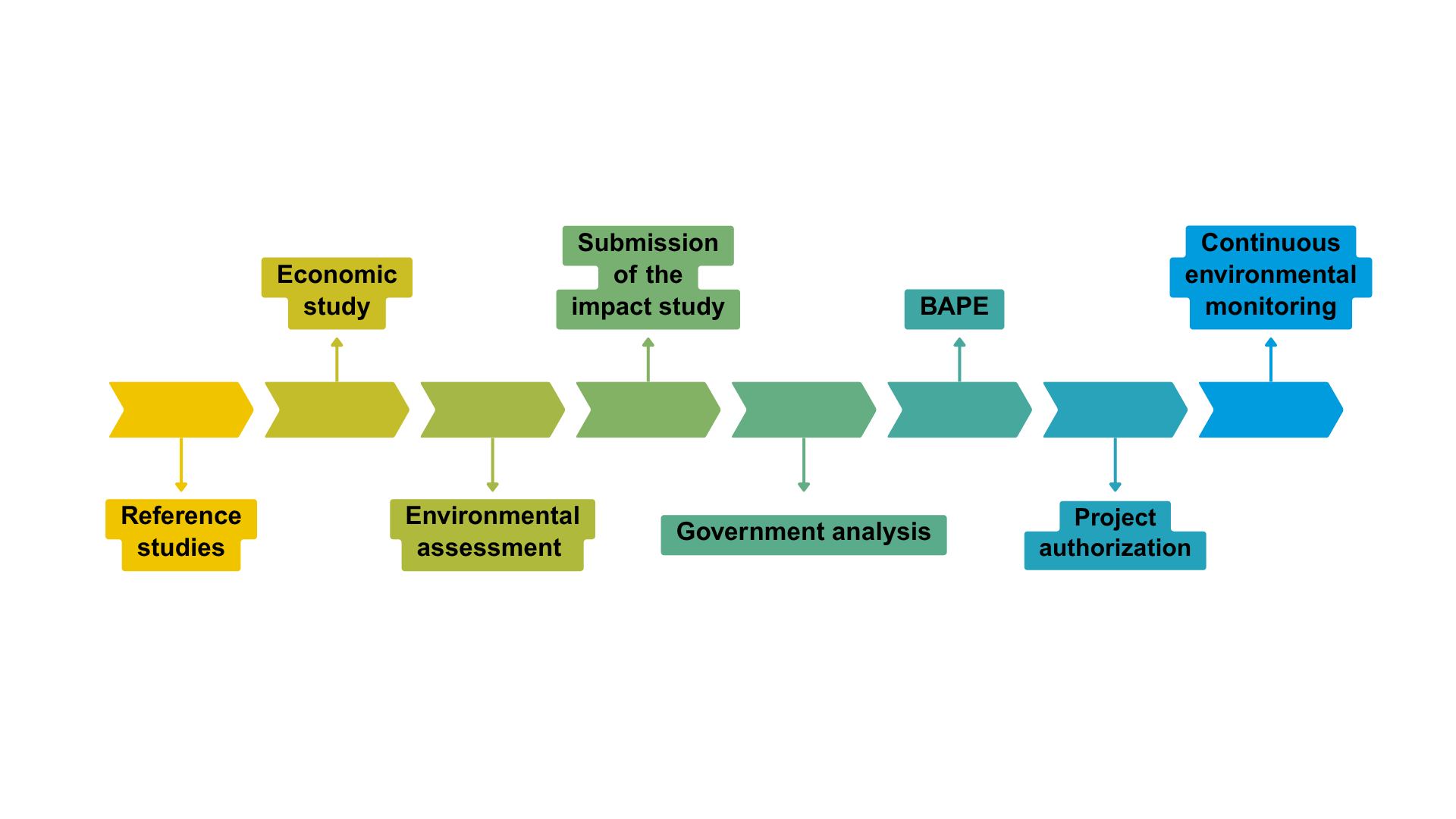 The provincial environmental assessment process resumed in 2026 for the optimized version of the project. The revised project notably includes a reduction in its surface footprint, as ore will be processed at the Canadian Malartic Complex, eliminating the need for certain on-site infrastructure.
WSP remains responsible for the impact assessment and holds all data collected since the beginning of the project, including data gathered as part of previous project versions. Contributions from consultations conducted with Indigenous communities and organizations, as well as with residents of the neighbourhood, have been retained and considered in the continuation of the project.
In this context, WSP and Transfert Environnement et Société are collaborating on the social and Indigenous components to ensure continuity in engagement activities, analysis of social issues, and integration of the perspectives of the communities concerned.
Participatory Development of the Environmental Impact Assessment
The participatory development of an impact assessment aims to integrate the concerns, knowledge, and perspectives of the community into the evaluation process. While all impact assessments generally include some form of participation, the scope and methods may vary depending on the project.
For the Wasamac mining project, a plan for information-sharing, dialogue, and engagement activities with stakeholders was implemented from the early stages. This included the creation of a Task Force prior to the project design phase, the deployment of communication tools and neighbourhood meetings, and the establishment of mechanisms to support ongoing dialogue with the community. The Task Force officially became a Monitoring Committee in 2025.
This participatory approach has helped inform and guide Agnico Eagle’s team in certain decisions, while also contributing to the development of concrete measures aimed at mitigating, enhancing, or offsetting identified impacts.
Next Steps
Consultation and engagement activities (targeted meetings, Monitoring Committee, Lac-Hélène Park activity, etc.) will continue over the coming months, up to the submission of the impact assessment planned for November 2026.
Following this submission, various initiatives will remain in place to ensure ongoing dialogue and to maintain a continued understanding of the concerns and expectations of the communities.
If you have any questions, comments, or suggestions, please do not hesitate to contact us!
This page will be updated as new information becomes available.


-
 Échanges avec le milieu socioéconomique - 11 juin 2026 (FR) (2.06 MB) (pdf)
-
Note technique et lettre de modification du projet (french) (5.94 MB) (pdf)
-
Directive pour la réalisation de lÉIE (french) (1.03 MB) (pdf)
-
Vision Citizen Approach Environmental Impact Assessment (2021) (15.6 MB) (pdf)
-
Consultation milieu socioéconomique 2021 (FR) (5.69 MB) (pdf)
