Continuing the dialogue with First Nations communities
Throughout the year, the Wasamac Mining Project team continued its engagement with several First Nations communities to provide updates on the project's progress, share information, and gather feedback from community members and representatives.
Meeting with the Cree Nation Government
On September 24, 2026, the Wasamac Mining Project team met with the Environmental Coordinator of the Cree Nation Government to present an update on the project's progress and discuss various environmental issues. Discussions focused in particular on ore transportation and water management. The meeting provided an opportunity to continue discussions and maintain an open dialogue regarding the advancement of the project.
Timiskaming First Nation Open House
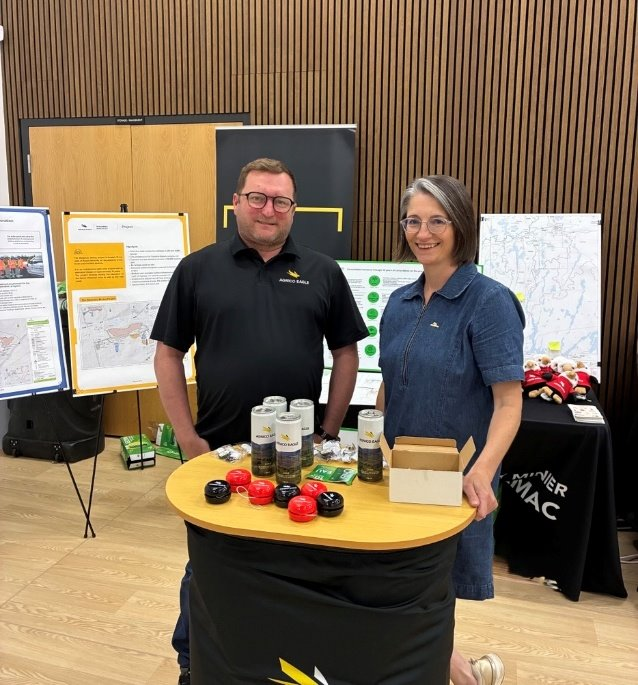
On July 8, 2026, the team participated in the open house organized by Timiskaming First Nation (TFN). The event brought together stakeholders from the mining, forestry, wind energy, and rail transportation sectors. For the occasion, members of the Wasamac team shared an information booth with the Upper Beaver Project team. Presentation materials were translated to facilitate accessible discussions with community members. Approximately 20 people visited the booth to learn more about the project. Discussions focused notably on the use of land for cultural and traditional purposes. Through a participatory mapping activity, participants were invited to identify areas they regularly use. The discussions provided valuable information regarding areas used for hunting, trapping, and gathering. Broader concerns related to environmental protection were also raised, particularly regarding water quality and the effects of deforestation on wildlife.
Continuing the Dialogue with the Abitibiwinni Community
On June 30, the Wasamac Mining Project team met with a representative of the Abitibiwinni community in Pikogan to provide an update on the project's progress and discuss the community's contribution to the Environmental and Social Impact Assessment (ESIA). During the meeting, the team presented the key features of the revised project, including the preliminary schedule, the preferred ore transportation approach, and the next steps related to bulk sampling activities. Discussions also covered the preparatory work planned over the coming years and upcoming regulatory processes. A significant portion of the meeting focused on the community's participation in the preparation of the ESIA. Discussions included updates to studies previously conducted by Abitibiwinni, revisions to sections describing the community within the impact assessment, and preferred approaches for continuing engagement. All parties reaffirmed their commitment to maintaining an open and constructive dialogue as the project continues to progress.
Project Presentation with Long Point First Nation
The Wasamac Mining Project was presented to Long Point First Nation on March 31, 2026, to provide an update on its progress and discuss future opportunities for collaboration. The presentation covered project optimizations, proposed infrastructure, water management, transportation options, advanced exploration activities, and the preliminary project schedule. Discussions also addressed the environmental assessment process, with filing anticipated in 2026, as well as opportunities for community participation. The meeting initiated discussions regarding Long Point First Nation's expectations and preferred approaches to ensuring ongoing collaboration and engagement throughout the project's development.
Project Update Meeting with Timiskaming First Nation
On March 10, 2026, the team met with representatives of Timiskaming First Nation (TFN) to discuss the project's progress and future collaboration opportunities. Discussions focused on the main modifications made to the project, including the absence of a processing plant on site, the transportation and processing of ore at the Canadian Malartic site, the reduced project footprint, and the elimination of cyanide use. Preliminary discussions were also held regarding TFN's participation in the impact assessment process. It was agreed that discussions would continue over the coming months through working sessions, information sharing, and potential site visits.

Thank you for your contribution!
Help us reach out to more people in the community
Share this with family and friends